Electric vs. Internal Combustion Forklifts: Which Is Right for Your Facility?
Electric vs. Internal Combustion Forklifts: Which Is Right for Your Facility?
Choosing between an electric forklift and an internal combustion (IC) forklift isn’t always a simple decision. The right choice depends on your facility, your application, and your long-term operational goals.
At BMH, we work with customers every day to evaluate their environment, usage demands, and budget to determine the best fit. Here’s what you should consider when deciding which type of forklift is right for your operation.
Indoor vs. Outdoor Use
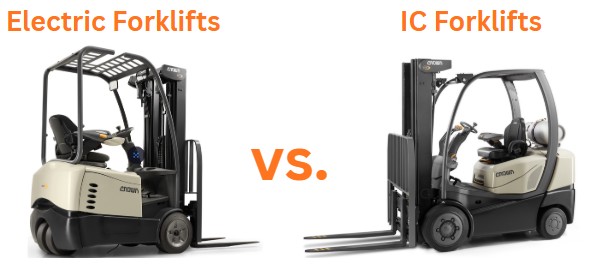
Electric forklifts
Electric forklifts are ideal for indoor use. They produce zero emissions, run quietly, and help maintain better air quality, especially in warehouses, food-grade facilities, and enclosed spaces.
IC forklifts
IC forklifts, including propane, gas, or diesel, are typically better suited for outdoor applications or rougher environments where ventilation is not a concern.
If your operation is primarily indoors with smooth concrete floors, electric is often the preferred choice.
Run Time and Refueling
Electric forklifts
Electric forklifts require battery charging time. If you operate multiple shifts, you may need additional batteries or a battery changing system.
IC forklifts
IC forklifts can be refueled quickly, making them convenient for high-utilization or continuous operations.
Advances in lithium-ion battery technology are closing the gap, offering faster charging and longer run times than traditional lead-acid batteries.
Maintenance and Operating Costs
Electric forklifts
Electric forklifts typically have fewer moving parts, no engine oil changes, and lower routine maintenance requirements. This can result in lower long-term maintenance costs.
IC forklifts
IC forklifts generally have higher maintenance needs due to engines, filters, fluids, and emissions systems. However, they may have a lower upfront purchase price depending on the model.
The true cost comparison should include:
- Fuel or electricity costs
- Preventative maintenance
- Downtime risk
- Expected lifespan
Performance and Application
IC forklifts
IC forklifts often provide higher torque for heavy outdoor loads, strong performance on inclines, and better handling on uneven surfaces.
Electric forklifts
Electric forklifts provide smooth acceleration, excellent maneuverability, and strong performance in warehouse racking environments.
Today’s electric forklifts are more powerful than ever and can handle many applications that were once considered IC-only.
Environmental and Safety Considerations
Many companies are moving toward electric fleets to reduce emissions, improve indoor air quality, lower noise levels, and support sustainability initiatives.
If safety, employee comfort, and environmental responsibility are priorities, electric may align well with your goals.
So, Which Is Best?
There is no one-size-fits-all answer.
The best forklift for your facility depends on:
- Your environment
- Load weights
- Hours of operation
- Budget
- Long-term plans
And that’s where BMH comes in.
As your local material handling expert, we can assess your facility, review your application, and recommend the right solution, whether that’s electric, internal combustion, or a mixed fleet.
If you’re considering upgrading your equipment in 2026, now is the perfect time to evaluate your options.
Ready to Get Started?
Contact BMH today to schedule a facility assessment and explore the best solution for your operation.